
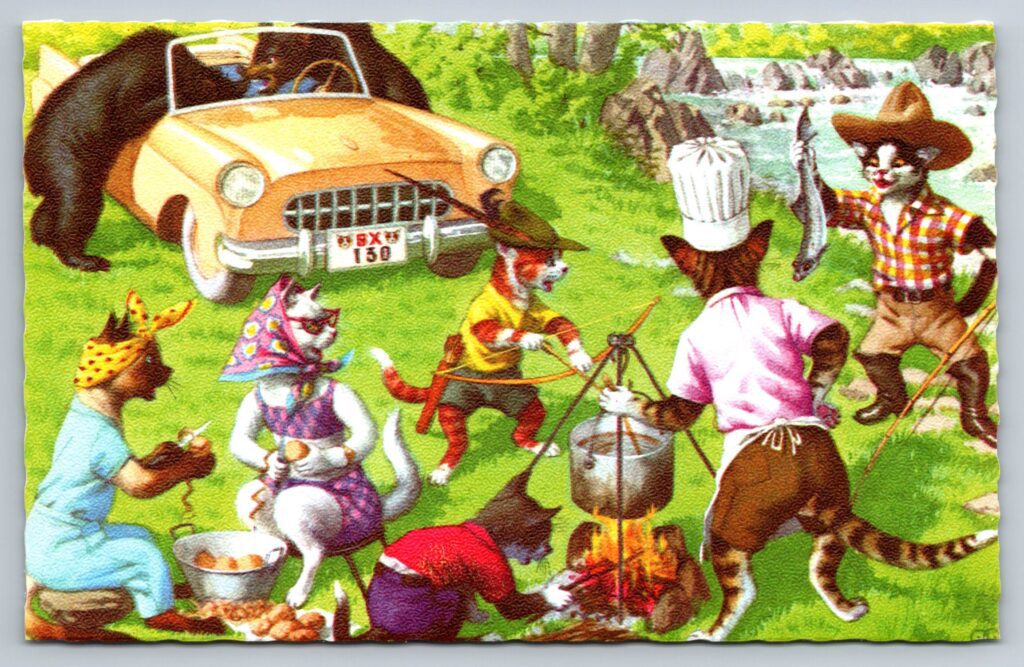
Anthropomorphic postcards are among the most imaginative and collectible postcards from the Golden Age of postcard publishing. Featuring animals, insects, plants and everyday objects behaving like humans, these cards continue to fascinate collectors more than a century after they were first produced.
Whether you’re a postcard enthusiast, an art lover, or simply curious about these unusual designs, this guide explores the history of anthropomorphic postcards, their most famous artists, their value to collectors, and the enduring appeal of anthropomorphic art.
What Does Anthropomorphic Mean in Art?
The word anthropomorphic comes from the Greek words anthropos (human) and morphe (form). In art, it refers to giving human characteristics to non-human subjects.
These characteristics might include:
- Wearing clothes
- Walking on two legs
- Showing human emotions
- Performing human activities
- Speaking or interacting like people
For example, an anthropomorphic postcard might feature rabbits playing golf, cats enjoying a tea party, or vegetables attending a wedding. The combination of familiar subjects and human behaviour creates humour, personality, and storytelling in a single image.
This post may contain affiliate links. Read our Affiliate Disclosure.
The Golden Age of Anthropomorphic Postcards
Anthropomorphic postcards became especially popular during the late Victorian and Edwardian periods, roughly between 1898 and the outbreak of the First World War in 1914, although many designs continued to be produced afterwards.
Before television, smartphones, and social media, postcards were one of the most popular ways to communicate and share entertainment. People sent them to family and friends, displayed them at home, and collected them in albums.
Publishers quickly realised that humorous and imaginative designs sold particularly well. Artists began creating entire worlds where animals, insects, and household objects behaved like people, leading to the rise of anthropomorphic postcards as a collecting category.
Leading publishers such as Raphael Tuck & Sons produced numerous anthropomorphic postcard series, helping to popularise the genre and create many of the designs that remain sought after by collectors today.
Common themes included:
- Birthdays
- Christmas and Easter
- Romance and courtship
- Sporting events
- Family life
- Humorous everyday situations
How Collectors Classify Anthropomorphic Postcards
Anthropomorphic postcards are typically collected alongside several related postcard genres, reflecting their wide appeal among both art enthusiasts and postcard collectors. Depending on the subject and style, they may be found in categories such as:
- Fantasy postcards
- Humorous postcards
- Animal postcards
- Artist-signed postcards
- Victorian and Edwardian postcards
Many collectors are drawn to anthropomorphic postcards because they combine imaginative artwork with a snapshot of everyday life from more than a century ago. The fashions, social customs, humour, and artistic styles of the period are often captured within a single image, making these postcards both entertaining collectibles and valuable pieces of social history.
Why Are Anthropomorphic Postcards So Popular?
The enduring popularity of anthropomorphic postcards comes down to three key factors.
Humour
There is something inherently funny about seeing a frog riding a bicycle or a cat dressed as a schoolteacher. These visual jokes appeal to people of all ages.
Creativity
Anthropomorphic artists created entire miniature worlds filled with imagination and storytelling. A single postcard can tell a complete story without using any words.
Nostalgia
For modern collectors, anthropomorphic postcards provide a glimpse into the artistic tastes and social humour of a bygone era.
Famous Artists of Anthropomorphic Postcards
Several talented illustrators helped make anthropomorphic postcards enormously popular.
Louis Wain (1860-1939)
Perhaps the most famous artist associated with anthropomorphic animals, Louis Wain became renowned for his illustrations of cats behaving like people. His felines attended parties, played sports, and wore fashionable clothing. Today, his postcards and prints remain highly sought after by collectors.
Arthur Thiele (1881-1954)
Arthur Thiele was one of the leading postcard artists of the early twentieth century. His delightful depictions of frogs, rabbits, insects, and farm animals in human situations made him a favourite among postcard collectors.
Lawson Wood (1878-1957)
Lawson Wood specialised in humorous monkey illustrations. His anthropomorphic monkeys were often shown golfing, socialising, and enjoying leisure activities. His postcards remain highly collectible.
Eugen Hartung (1897-1973)
Working under the name “Maire”, Hartung became famous for his charming illustrations of cats, dogs, rabbits, and other animals with distinctly human personalities.
Randolph Caldecott (1846-1886)
Although Randolph Caldecott died before the Golden Age of postcards, his illustrations of animals with human characteristics helped influence the generations of artists who later created anthropomorphic postcard designs.
What Are the Most Valuable Anthropomorphic Postcards to Collect?
Not all anthropomorphic postcards are equally valuable. Several factors can significantly increase desirability and value among collectors.
Artist-Signed Postcards
Cards illustrated by well-known artists such as Louis Wain, Arthur Thiele, and Lawson Wood are often among the most sought-after examples. Collectors particularly value cards that clearly identify the artist.
Rare Anthropomorphic Designs
Unusual subjects, limited print runs, and less commonly seen themes can command higher prices. Cards featuring insects, vegetables, frogs, or other unexpected characters in human situations are often especially popular.
Holiday-Themed Cards
Anthropomorphic postcards produced for Christmas, Easter, Valentine’s Day, and Halloween remain highly collectible. Seasonal cards were often kept and displayed, making some designs particularly memorable to collectors.
Early Postcards from the Golden Age
Examples produced during the postcard boom of the late Victorian and Edwardian periods are generally the most desirable. Many collectors focus specifically on cards published between the 1890s and the First World War.
Excellent Condition Examples
Condition plays a major role in determining value. Cards with bright colours, clean surfaces, sharp corners, and minimal wear typically attract the strongest prices.
Postcards by Famous Publishers
Publishers such as Raphael Tuck & Sons produced many high-quality anthropomorphic postcards. Collectors often seek out specific series and publishers known for their artistic standards and popularity during the postcard collecting boom.
Famous Examples of Anthropomorphic Characters
Anthropomorphic art didn’t disappear with vintage postcards. Some of the world’s most beloved fictional characters are anthropomorphic.
Popular examples include:
- Mickey Mouse
- Bugs Bunny
- Peter Rabbit
- Winnie-the-Pooh
- Paddington Bear
- Sonic the Hedgehog
- Teenage Mutant Ninja Turtles
These characters continue a tradition that dates back centuries, using human-like animals to entertain, teach lessons, and tell memorable stories.
Starting an Anthropomorphic Postcard Collection
If you’re interested in collecting anthropomorphic postcards, consider the following tips:
Choose a Theme
Many collectors focus on a specific type of postcard, such as cats, rabbits, frogs, or holiday greetings.
Learn About Artists
Understanding the work of key artists can help you identify desirable postcards and recognise potential bargains.
Buy the Best Condition You Can Afford
Condition is often one of the most important factors affecting long-term value.
Store Cards Properly
Use archival-quality sleeves and keep postcards in a box or album away from direct sunlight, moisture, and extreme temperatures.
Research Market Prices
Auction sites, collector clubs, and specialist dealers can provide useful guidance on current market values.
Why Collectors Love Anthropomorphic Postcards
Anthropomorphic postcards combine art, humour, history and nostalgia in a way that few other collectibles can match. Their playful imagery appeals to both casual collectors and serious enthusiasts, while their historical significance offers a fascinating glimpse into everyday life during the late Victorian and Edwardian eras.
From cats hosting dinner parties to frogs riding bicycles, these miniature works of art continue to delight new generations of collectors.
Whether you’re drawn to mischievous cats, golfing rabbits or dancing vegetables, anthropomorphic postcards offer a unique blend of creativity, humour and social history. Their connection to celebrated illustrators such as Louis Wain, Arthur Thiele and Lawson Wood only adds to their appeal. Long after their Golden Age, these wonderful postcards continue to capture the imagination of collectors around the world.