
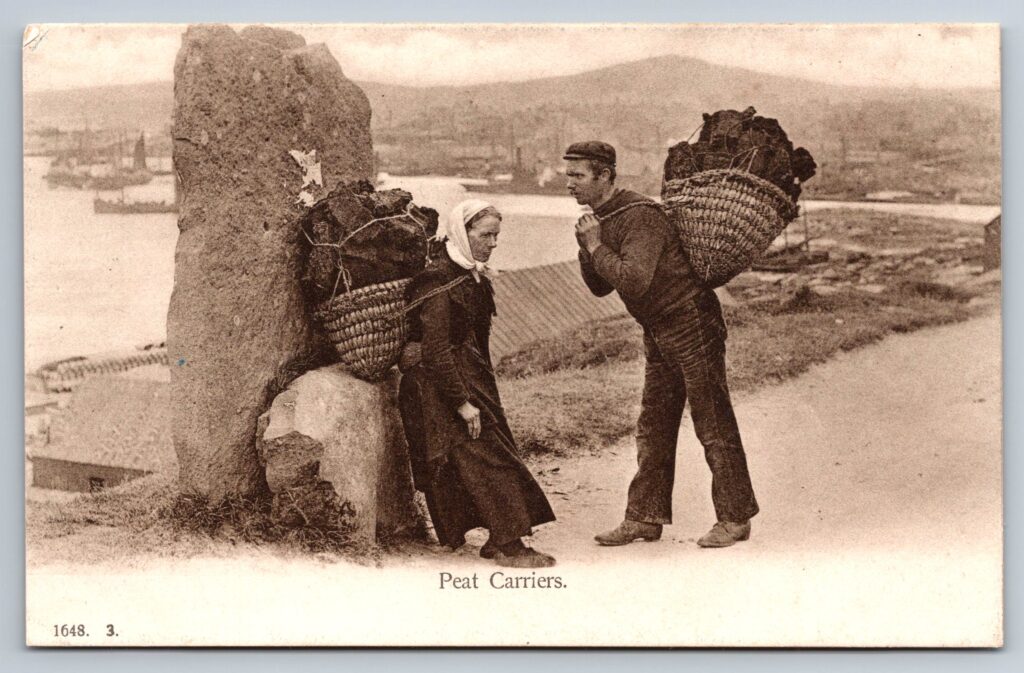
This striking early twentieth-century postcard, titled Peat Carriers, depicts two workers transporting freshly cut peat in large woven creels along a country road. A woman pauses to rest against a stone while a man, also heavily laden, stands beside her. In the background, a harbour with sailing vessels and a coastal settlement hints at the rural communities that once depended on peat as an essential source of fuel.
Although the postcard does not identify the location, the scene offers a fascinating glimpse into a way of life that has largely disappeared.
This post may contain affiliate links. Read our Affiliate Disclosure.
Carrying Peat
Before coal, gas and electricity became widely available, peat was an important domestic fuel in many parts of Britain and Ireland. After being cut from peat bogs and dried, it was transported to homes using large handwoven baskets known as creels. Carrying heavy loads over rough ground was physically demanding work and formed part of everyday life in many rural communities.
This postcard captures that labour with remarkable clarity, making it both a historical record and an attractive photographic study.
Frederick Hartmann and the Divided-Back Postcard
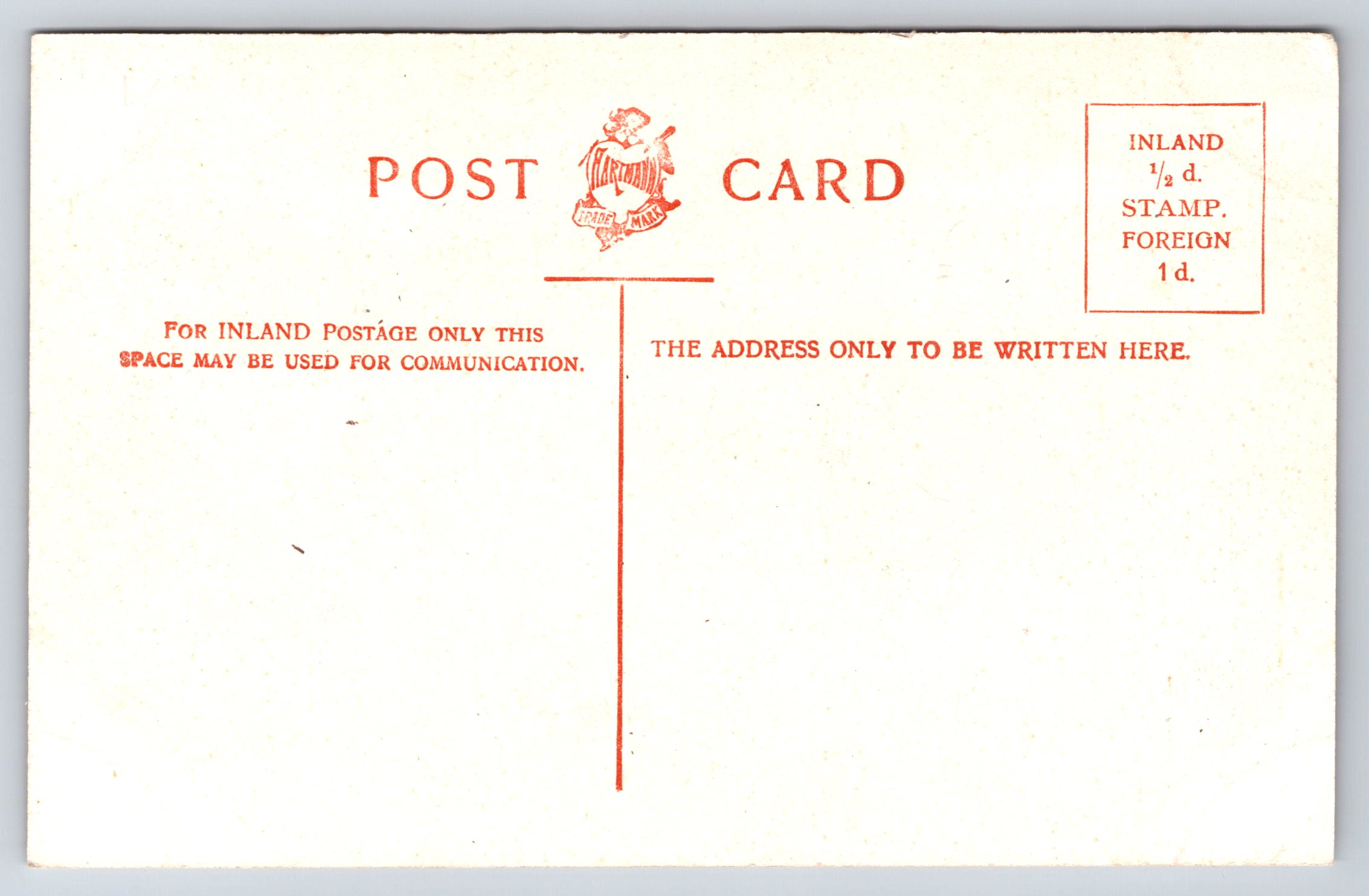
The reverse bears the distinctive Hartmann trade mark, printed in red ink on a divided-back postcard. This identifies the publisher as Frederick Hartmann, a London-based postcard publisher active between approximately 1902 and 1909. Hartmann played an important role in popularising the divided-back postcard format in Britain, allowing messages and addresses to be written on the same side of the card. Many of his postcards were printed in Saxony, Germany, which was renowned for its high-quality printing during the postcard boom.
The front carries the printed title “Peat Carriers.” together with the series reference 1648. 3., typical of Hartmann’s numbered postcard series.
Why Collectors Like Occupational Postcards
Occupational postcards are popular because they preserve everyday scenes that were rarely photographed in such detail. Rather than depicting famous landmarks, they document ordinary people at work, providing valuable insight into social history.
This postcard is likely to appeal to collectors interested in:
- Frederick Hartmann postcards
- Rural occupations
- Peat cutting and transport
- Traditional creels and basketry
- Social history
- Early photographic postcards
Its strong composition, documentary style and uncommon subject make it an appealing example of Edwardian rural life.
What Is This Hartmann Peat Carriers Postcard Worth?
Based on comparable early Hartmann photographic postcards and the desirability of occupational subjects, a realistic retail value is:
£8–£12
Exceptional examples with minimal wear, excellent contrast or strong provenance may achieve £12–£15, while cards with heavier creasing, staining or damage generally sell for £5–£8.