
This vintage postcard shows Pier and Undercliff Drive in Bournemouth, looking across the seafront towards the pier and coastline beyond. The elevated viewpoint captures the promenade, beach, gardens, and cliffside paths that helped make Bournemouth one of the most fashionable seaside resorts of the late Victorian and Edwardian periods.
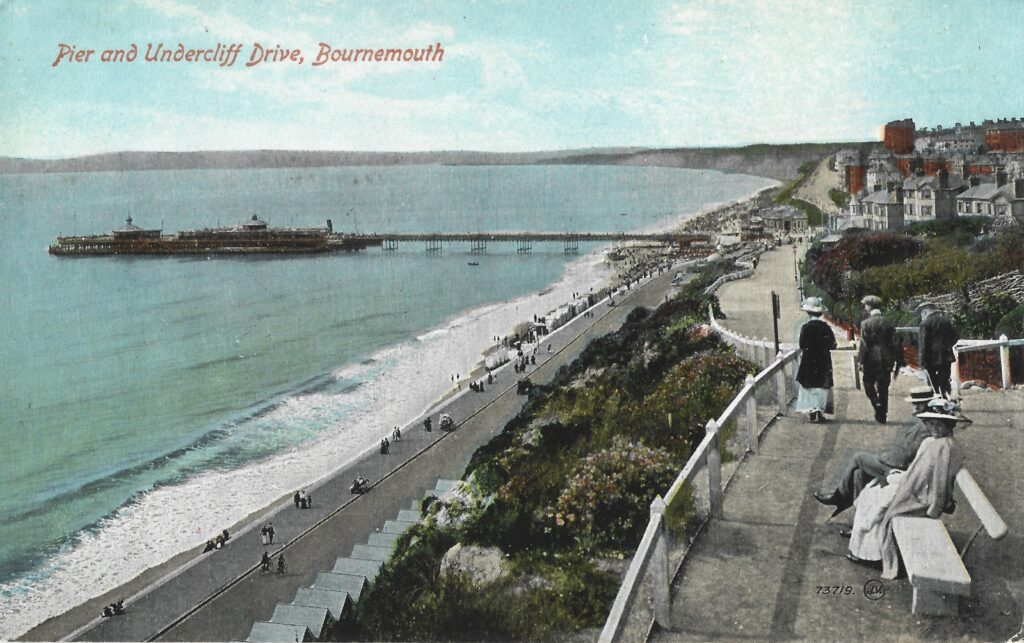
The postcard features a lightly colourised image, a common style used on many early topographical postcards of the period. The reverse includes the wording “British Made” alongside a small diamond-shaped “W” publisher’s mark. The calm sea, wide promenade, and carefully maintained gardens reflect the growing popularity of coastal tourism during the early twentieth century, when Bournemouth attracted visitors from across Britain seeking sea air, leisure, and relaxation.
The scene also offers an interesting glimpse into everyday life at the time. Small groups of people can be seen walking along the promenade and sitting on benches overlooking the bay, while bathing huts line the beach below. The pier itself was one of Bournemouth’s best known landmarks and played a major role in the town’s identity as a holiday destination.
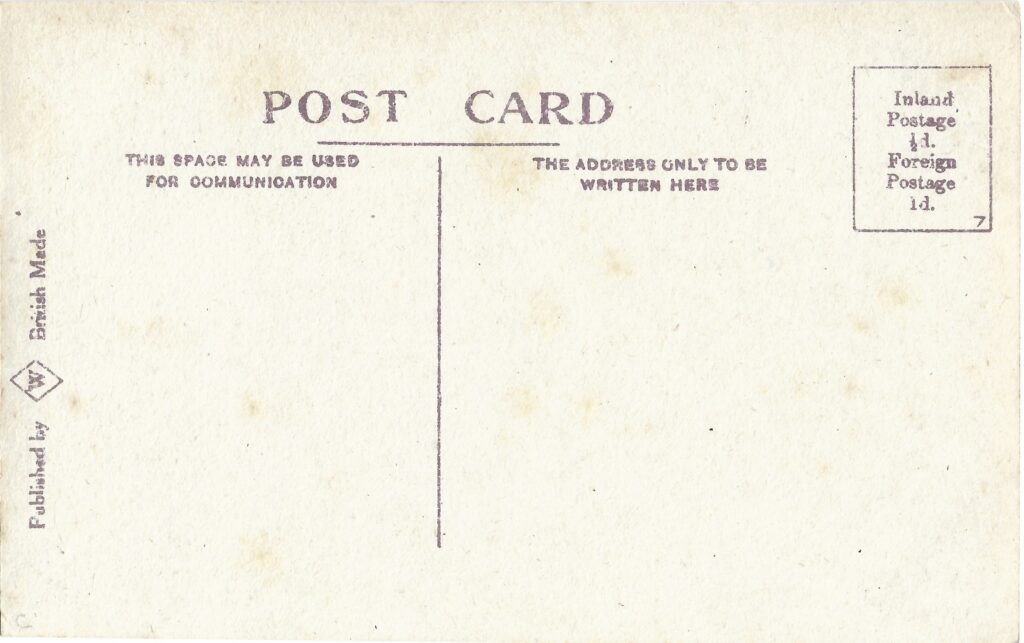
The reverse has a divided back design with separate sections for correspondence and the address, indicating the postcard was produced after divided backs became standard in Britain in the early 1900s. Unlike many surviving postcards from the period, this example was never posted and remains unused.
Today, postcards like this provide valuable visual records of how British seaside towns looked during the early twentieth century, preserving details of promenades, architecture, fashions, and coastal life that have changed considerably over time.