
If you collect old British postcards, you’ve probably come across the name Frith. The company produced thousands of photographic views of towns, villages and holiday destinations across Britain, and many of these postcards are still easy to find today.
Frith postcards are particularly interesting because they don’t just show famous landmarks. They captured high streets, railway stations, hotels, churches, beaches, village centres and ordinary residential streets. Years later, those photographs can provide a fascinating record of how a place has changed.
If you have a Frith postcard and want to find out more about it, the name and number printed on the card are often a good place to start.
Who Was Francis Frith?
Francis Frith was born in 1822 and became a successful Victorian photographer and photographic publisher.
After travelling abroad and photographing places including Egypt and the Middle East, he established a photographic business in England. From the 1860s, Frith and the photographers working for his company began building an extensive photographic record of towns, villages and landmarks across Britain.
Francis Frith died in 1898, but the family business continued under his sons and later his grandson. This means that a postcard carrying the Frith name wasn’t necessarily photographed by Francis Frith himself.
The present-day Francis Frith Collection holds photographs dating from 1860 to 1970 and covering thousands of towns and villages across Britain.
When Did Frith Start Producing Postcards?
The Frith business originally sold photographic prints rather than postcards, but the rapid growth of picture postcards at the beginning of the 20th century created a new market for its huge collection of local photographs.
Frith became a major publisher of British view postcards and continued producing them for much of the 20th century.
The timing coincided with an important change to British postcards. In 1902, Britain permitted the divided back, allowing the message and address to be written on the reverse while the picture could fill the front.
It’s worth remembering that the 1907 date often quoted for the introduction of divided-back postcards relates to the United States, not Britain.
You can read more about this in my guide to How to Date Old Postcards.
What Do Frith Postcards Show?
Frith postcards cover an enormous range of British locations.
Some feature well-known seaside resorts and tourist attractions, while others show much more everyday scenes. You might find a postcard of a village high street, railway station, hotel, harbour, church, park or quiet residential road.
Those ordinary scenes can be some of the most interesting today.
Look closely at an old street view and you may spot shops that have disappeared, buildings that have since been demolished, old advertisements, early cars, tramlines or completely different road layouts.
Frith photographers also returned to locations over the years to produce updated views, so postcards can sometimes show how the same place changed over several decades.
How to Identify a Frith Postcard
This post may contain affiliate links. Read our Affiliate Disclosure.
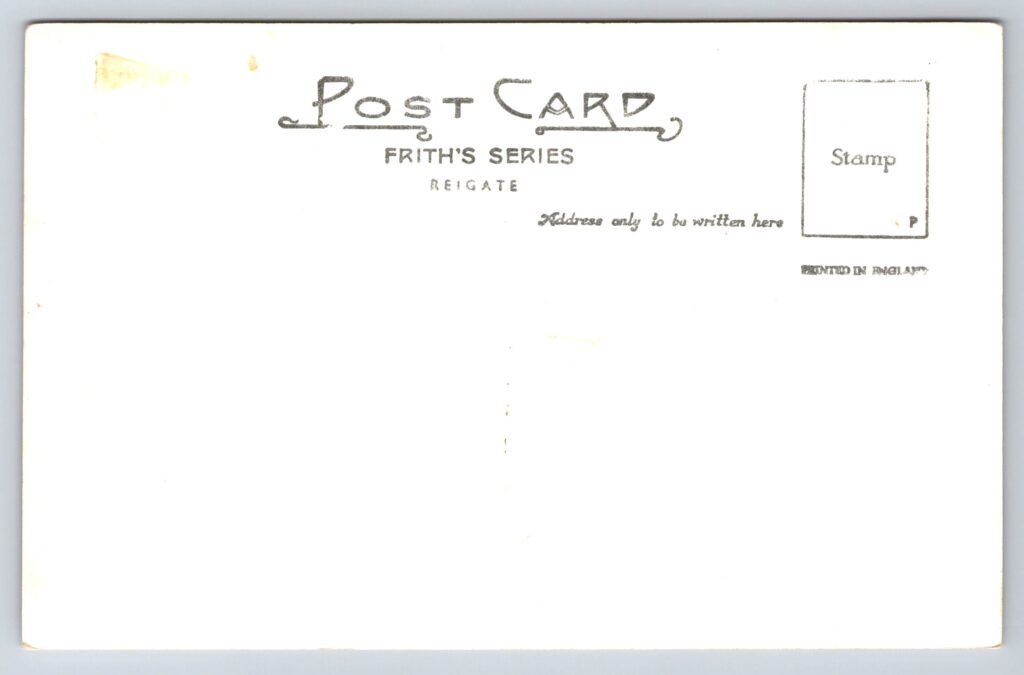
If you have a postcard you think is by Frith, check both the front and back carefully.
Look for the Frith name, the title of the view and, importantly, a reference number. Depending on the age and design of the card, these details may appear on the front or reverse.
The reference number can be particularly useful because the surviving Francis Frith archive catalogues photographs by number.
When researching a card, try searching for the place name together with Frith and the reference number.
For example:
Swanage Frith 52886
If the photograph survives in the online collection, you may be able to find its approximate or exact photographic date and other information about the view.
Search the Francis Frith Collection
Can You Date a Frith Postcard From Its Number?
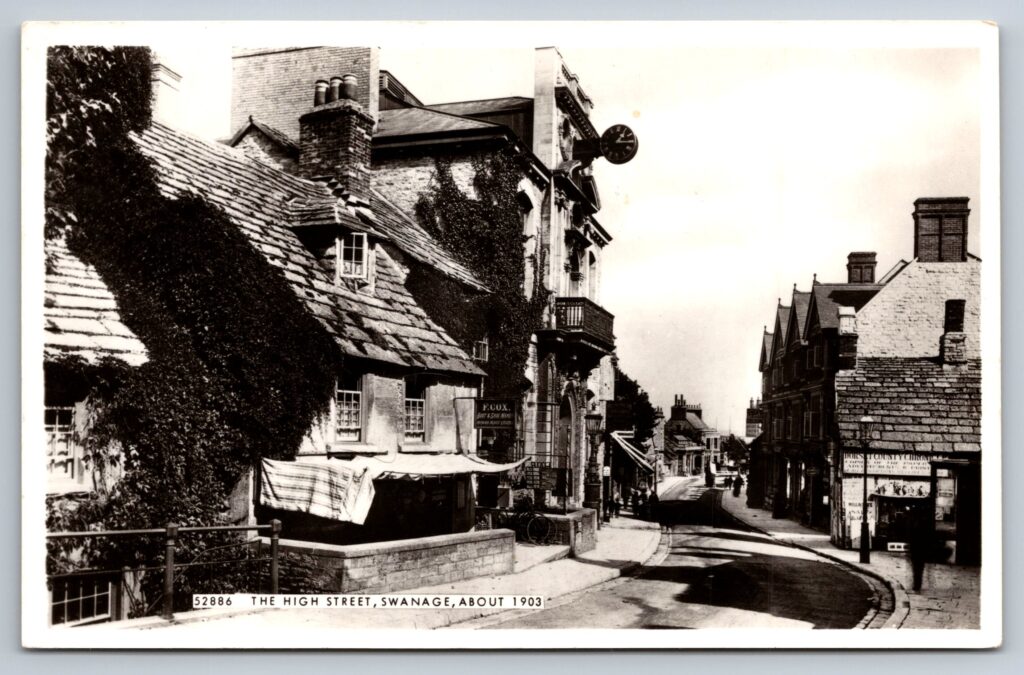
A Frith reference number can help identify the photograph, but I wouldn’t use the number alone to assign an exact date to a postcard.
Instead, search the number in the Francis Frith Collection and see whether the original photograph has been catalogued.
Many photographs in the archive have a year or approximate date attached to them. This can give you a very useful starting point, but there is an important distinction to make.
The Photograph and Postcard May Have Different Dates
With a Frith postcard, there can be several different dates to consider. The original photograph may have been taken years before the postcard was produced, and the postcard itself may have been kept for some time before it was eventually posted.
For example, the Francis Frith archive might date the original photograph to 1907, while a surviving postcard featuring that image has a 1912 postmark. This simply shows that the photograph was being used on a postcard that was still in circulation several years later.
For this reason, a date given for the original photograph shouldn’t automatically be described as the postcard’s publication date.
Unless there is evidence confirming when the postcard itself was produced, it is more accurate to say something such as:
Original photograph dated 1907; this copy of the postcard was posted in 1912.
Frith Postcards and Local History
One of the things that makes Frith postcards so interesting is the amount of local history contained in a seemingly ordinary photograph.
A street scene might show the original appearance of a building before it was altered. A shop sign can reveal the name of a former business. Railway stations, hotels, piers and other landmarks may have disappeared completely.
You can also find smaller details such as old road signs, street furniture, advertisements, vehicles and clothing.
If you’re researching the history of a particular town or village, an old Frith postcard can therefore be much more than a collectable picture.
Were Frith Postcards Always Black and White?
No. Frith postcards appeared in different styles over their long production history.
Many early examples are monochrome photographic views, but later postcards were also produced in colour. The Francis Frith Collection describes some of its coloured postcards from the 1950s and 1960s as Collo-Colour cards.
So you shouldn’t assume that a colour Frith postcard is particularly modern.
The back design, reference number, printing details, postmark and image itself can all help you work out its likely age.
Frith Multiview Postcards
Frith also produced multiview postcards, sometimes described as composite postcards.
Instead of featuring one large photograph, these postcards contain several different views of the same town, seaside resort or area.
A multiview card might combine a beach, promenade, local landmark and town-centre scene, for example.
These were particularly suited to holiday postcards because one card could show several of the sights associated with a destination.
What Happened to F. Frith & Co?
The Frith business continued long after Francis Frith’s death.
By 1939, no member of the Frith family was available to run the company, and Arthur Frederick Sergeant became managing director. Sergeant already had considerable experience in the postcard industry, including with Raphael Tuck.
The company continued after the Second World War, but changes in the postcard market eventually took their toll. The original F. Frith & Co business closed around 1970.
That could easily have been the end of the story.
Saving the Francis Frith Collection
After the business closed, its huge archive of photographic negatives was at risk of being lost.
In 1977, John Buck acquired the archive and began preserving it as the Francis Frith Collection. The photographs were subsequently catalogued and digitised, which is why so much of the original collection can still be researched today.
For postcard collectors, that’s particularly useful. If you have an old Frith card, there’s a chance you can find information about the original photograph online more than a century after it was taken.
How to Research Your Frith Postcard
If you’re trying to identify or date a Frith postcard, start by writing down everything printed on the card.
Look for the place name, picture title, Frith name and reference number. Search the Francis Frith Collection to see whether you can identify the original photograph.
Then check the postcard itself for other clues.
A postmark tells you when that particular copy was used. The stamp and back design can help establish a period, while buildings, vehicles and businesses visible in the photograph can provide additional evidence.
It’s also worth searching for other copies of the same postcard. An earlier postmarked example can sometimes help establish how long a particular design had been in circulation.
Most importantly, don’t automatically copy a date from an online sales listing. Try to find the evidence behind it.
Are Frith Postcards Valuable?
The Frith name alone doesn’t make a postcard particularly valuable.
The company produced postcards in very large numbers, and many have survived. Value depends on the individual card and factors such as age, location, subject, rarity, condition and collector demand.
A common view of a major tourist attraction may be inexpensive, while an unusual view of a small village, lost railway station, demolished building or rarely photographed street could be much more interesting to collectors.
The condition of the card also matters, although a scarce or historically interesting view can still be collectable with some wear.
Rather than giving all Frith postcards the same price range, it’s better to research the particular card and compare it with genuinely similar examples.
A Photographic Record of Britain
What I find most interesting about Frith postcards is how much history can survive in an ordinary street scene.
A postcard that was originally bought as a holiday souvenir might now show a hotel that disappeared decades ago, a row of shops that has completely changed or a railway station that no longer exists.
And because so much of the original Francis Frith photographic archive has survived, these postcards are often particularly rewarding to research.
If you have a Frith postcard, look beyond the picture. The reference number, postmark and small details printed on the card may help uncover the history behind the view.
Looking to add to your collection?
Browse the latest vintage postcards we have for sale.