
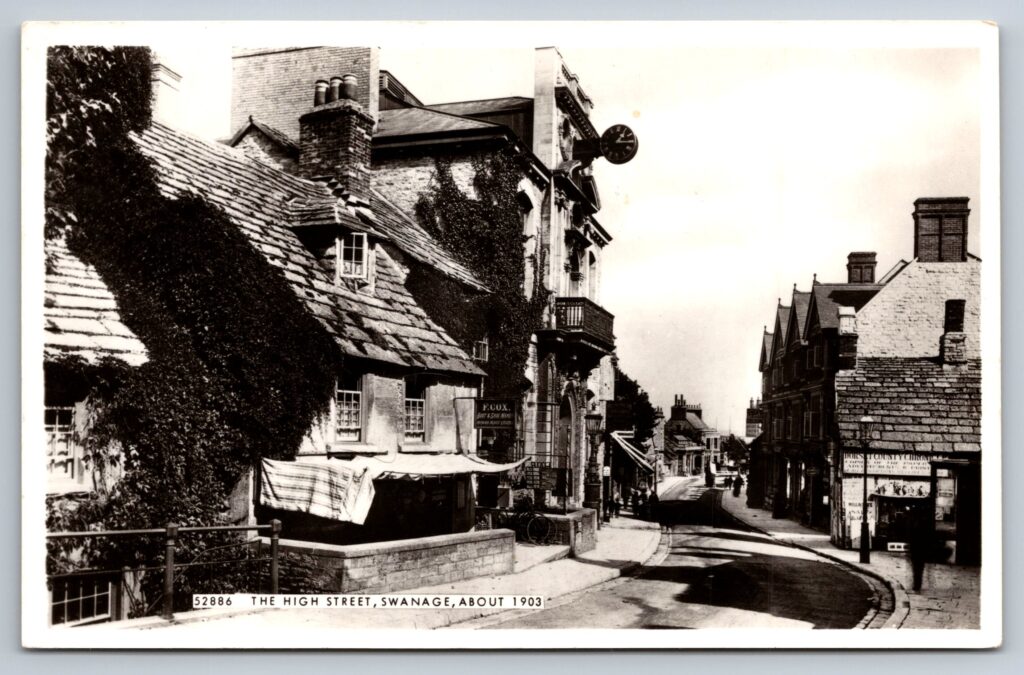
This vintage photographic postcard captures The High Street, Swanage, Dorset, as it appeared around 1903. At the time, Swanage was already becoming a popular seaside destination, yet the town still retained much of its traditional character.
The street is noticeably quieter than today, with horse-drawn transport replacing motor vehicles and pedestrians strolling along wide pavements. Many of the stone and brick buildings shown in the photograph still survive, making postcards like this fascinating comparisons with the modern High Street.
One feature that immediately catches the eye is the distinctive clock projecting from the building on the left-hand side of the street, while the ivy-covered cottage in the foreground provides a striking contrast to the larger commercial buildings beyond. Details such as shop signs, gas lamps and traditional roofing make this an excellent record of everyday Edwardian life.
Frith’s Series Postcards
This postcard was published by Frith’s Series of Reigate, one of Britain’s best-known postcard publishers.
Founded by the pioneering photographer Francis Frith, the company became famous for producing exceptionally detailed photographs of towns, villages and beauty spots throughout Britain. Their images now provide an invaluable historical record, allowing collectors to see how places changed over the decades.
Unlike many artists’ impression postcards of the period, Frith’s cards were based on real photographs, making them especially popular with both local historians and postcard collectors.
The Reverse
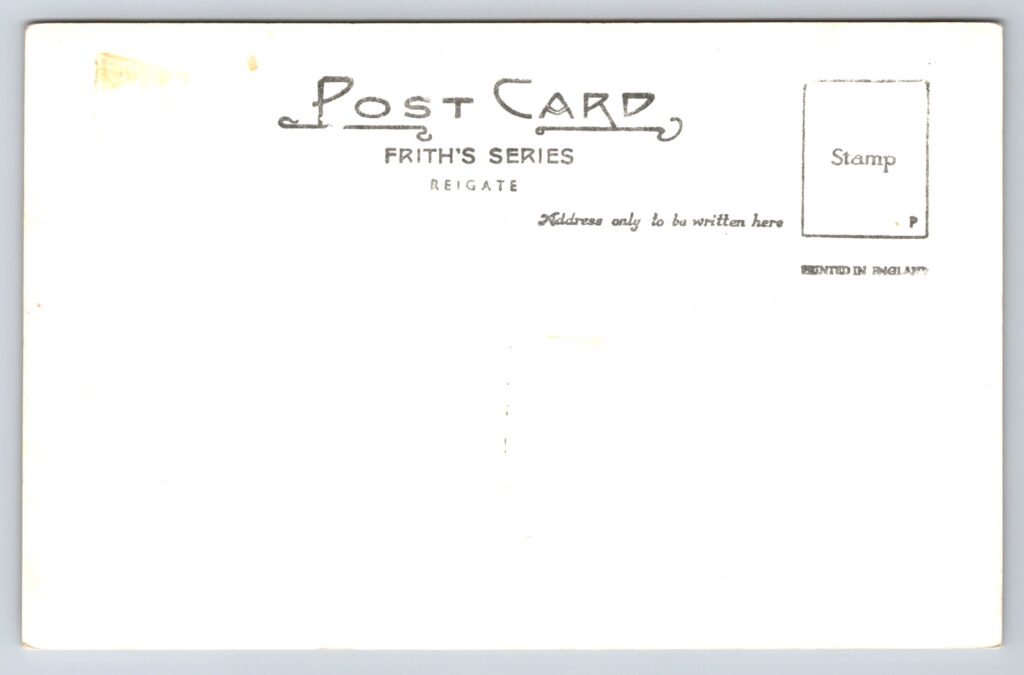
The reverse bears the familiar Frith’s Series – Reigate imprint and is marked “Printed in Saxony.”
Many high-quality British postcards produced during the late Victorian and Edwardian periods were printed in Germany, particularly in Saxony, where printing technology was regarded as some of the finest in the world. Imports from Germany largely ceased after the outbreak of the First World War, making these earlier Saxony-printed cards particularly desirable to collectors.
This example also has an undivided back, with space for only the address. Messages would normally have been written on the picture side, placing this design among the earlier postcard formats used before divided backs became standard in Britain.
Why I Like This Postcard
Swanage has always been one of my favourite places to visit. I spent many summer holidays there as a child, so finding postcards like this feels like looking through a window into the town’s past.
It’s fascinating to compare this peaceful Edwardian street scene with the bustling High Street visitors enjoy today. Although more than 120 years have passed, many of the buildings remain recognisable, making this postcard both nostalgic and historically significant.
Collectability and Value
Early photographic postcards of Swanage continue to attract strong interest from collectors, particularly those published by Frith’s Series. Street scenes are generally more sought after than general views because they document local businesses, architecture and everyday life that has often disappeared.
Value Range
This early Frith’s Series postcard of High Street, Swanage (c.1903) typically falls within the £5–£8 value range. Early topographical street scenes from the Golden Age remain popular with collectors, and views of Swanage are consistently sought after.
Looking to add to your collection?
Browse the latest vintage postcards we have for sale.